
Share with UR Contacts
- Feeling weak during Navratri fasting hits harder than you expect.
- You start strong.
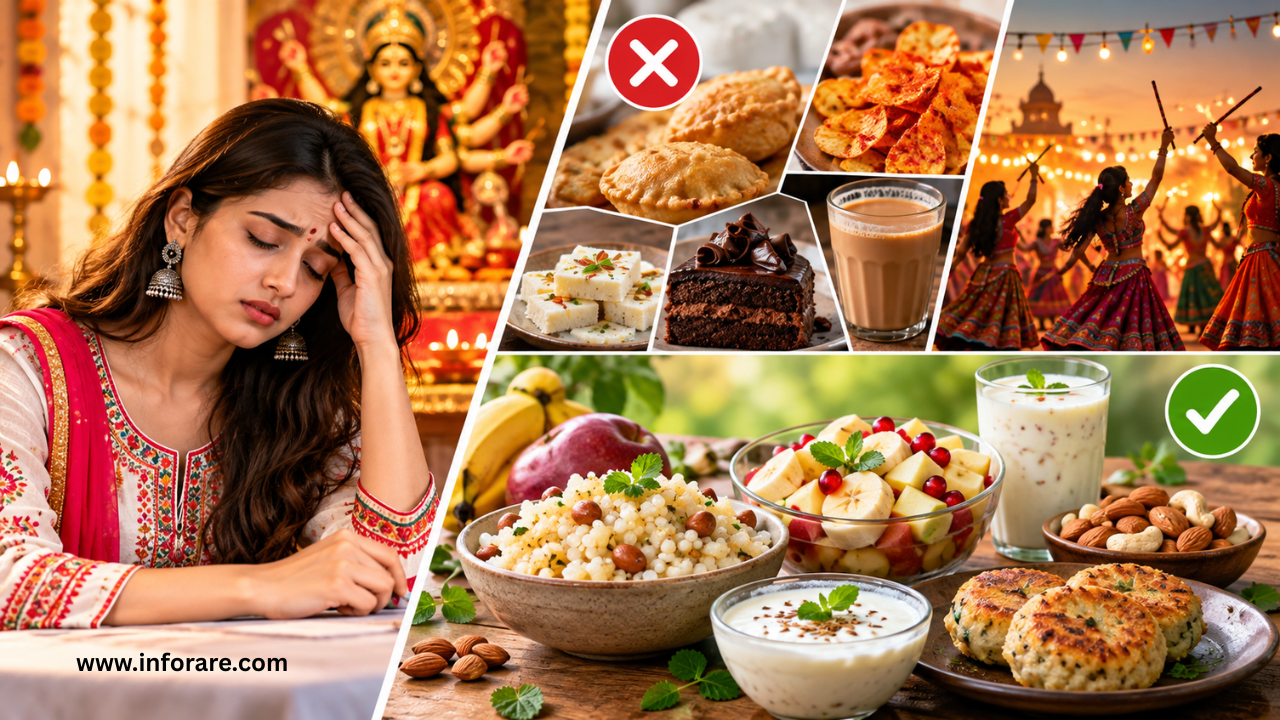
- By midday on your Navratri fast, you feel: low energy, dizziness, headaches, and constant tiredness.
- Fasting is supposed to feel tough, right?
- Wrong.
- That weakness isn’t a badge of honor.
- It’s your body waving a red flag.
- Most fatigue during Navratri doesn’t come from skipping regular meals.
- It comes from six quiet mistakes that drain your energy without you noticing.
- Fix these, and your fast goes from survival mode to steady, calm energy.
Why You Feel Weak During Navratri Fasting (Even When You’re “Eating”)
- Navratri fasting rules vary by family and region.
- Some people eat one meal.
- Some eat fruits and milk only.
- Some allow sabudana, kuttu, Rajgira, and certain veggies.
- But here’s the pattern I keep seeing:
- People swap regular food for fasting food and assume they’re covered.
- They’re not.
- Most vrat meals are heavy on carbs and oil, light on protein and fluids.
- Your blood sugar spikes, then crashes.
- Your electrolytes drop.
- Your stomach feels full but your cells are starving.
- Result?
- You feel weak during Navratri fasting even though you “ate.”
- The fix isn’t eating more.
- It’s eating smarter.
Mistake 1: Loading Up on Fried Vrat Foods
The Problem
- You know the scene.
- Morning puja done.
- Time for breakfast.
- What’s on the plate?
- Sabudana vada
- Kuttu puri
- Fried potato tikkis
- Pakoras
- Chips made from sama rice
- They taste great.
- They also hit like a brick.
- Deep-fried foods slow digestion.
- They make you feel heavy, sleepy, and bloated.
- Oil + carbs = quick energy, then a hard drop.
- Experts note that a fast built on fried snacks can turn into a high-calorie, low-nutrition diet that leaves you drained by day three.
What to Eat Instead
| Instead of | Choose |
| Kuttu puri | Kuttu roti or kuttu cheela with little oil |
| Sabudana vada | Light sabudana khichdi |
| Potato chips | Roasted makhana |
| Fried pakoras | Steamed or lightly sautéed vegetables |
| Deep-fried tikkis | Pan-cooked tikkis with minimal oil |
Practical Tip
- Use roasting, steaming, boiling, or shallow cooking more often than deep-frying.
Mistake 2: Skipping Fluids (and Calling Chai “Hydration”)
- You drink tea.
- Maybe coffee.
- Maybe one glass of water if you remember.
- Then you wonder why your head pounds by 3 PM.
- Tea and coffee are diuretics.
- They pull water out.
- During fasting, you already risk dehydration, especially if you’re active or it’s warm outside.
- Low fluids = low energy, headaches, dizziness, constipation.
What to Drink Instead
- Water, through the day (keep a bottle in sight)
- Coconut water
- Lemon water with a pinch of sendha namak
- Chaas or buttermilk (light, not too salty)
- Unsweetened milk
- Fresh fruit-based drinks (no added sugar)
- Light herbal teas (as a side, not your main “meal”)
Rule of thumb:
Don’t wait for thirst.
Sip every 30–45 minutes.
If your urine is dark, you’re already behind.
Mistake 3: Going Too Long Between Meals
The Problem
- Some people think fasting means one big meal at night.
- Or maybe one in the morning, one at night.
- Nothing in between.
- Your blood sugar tanks.
- Your brain fogs.
- Your hands shake.
- You feel weak during Navratri fasting because your body is running on empty for hours.
- Think of your body like a phone.
- You wouldn’t let it drop to 3% and expect it to run smoothly.
- Small top-ups beat one huge charge.
What to Eat Instead
- Suggest smaller, balanced meals at regular intervals:
- Fruit with a handful of almonds or walnuts.
- Curd with fruit and seeds.
- Roasted makhana.
- Coconut water.
- Paneer with a small portion of vegetables.
- A light bowl of sama rice or kuttu khichdi.
Practical Tip
Plan three smaller meals and one or two light snacks instead of waiting until you feel extremely hungry.
Mistake 4: Skipping Protein Entirely
The Problem
- Most vrat plates look like this:
- Sabudana
- Potatoes
- Kuttu or Rajgira roti
- Maybe some curd on the side
- Where’s the protein?
- Nowhere.
- Carb-heavy meals digest fast.
- You’re hungry again in an hour.
- Energy dips.
- Mood dips.
- Focus dips.
- Nutritionists point out that many vrat diets end up low on protein, which makes you feel drained quickly.
What to Eat Instead
- Add a protein source to every main meal:
- Paneer bhurji (no onion/garlic if that’s your rule)
- Plain curd or Greek yoghurt
- Milk or unsweetened lassi
- Roasted peanuts
- Almonds, walnuts, pumpkin seeds
- Makhana with curd or milk
- Rajgira-based dishes (if allowed in your fast)
- Simple combo: Kuttu roti + paneer bhurji + cucumber slices.
- Filling. Steady. No crash.
Mistake 5: Replacing Meals with Endless Cups of Tea or Coffee
The Problem
- You skip breakfast.
- Instead, you have:
- Cup 1: 9 AM
- Cup 2: 11 AM
- Cup 3: 1 PM
- Caffeine gives a short boost.
- Then you feel more acidic, more dehydrated, and hungrier than before.
- Your stomach growls.
- Your hands feel jittery.
- You tell yourself you’re “fine.”
- You’re not.
What to Have Instead
- Coconut water (hydration + light sweetness)
- Chaas (fills you up, gentle on stomach)
- Milk with a few nuts
- Lemon water
- Fruit with yoghurt
- Herbal tea alongside a proper snack (not as the snack)
- If you love your chai: Have one cup, not five.
- Don’t drink it on an empty stomach.
- Add less sugar.
- Pair it with a handful of nuts or a small fruit.
Mistake 6: Eating a Huge Meal After Breaking the Fast
The Problem
- Fast ends.
- You’re very hungry.
- You grab:
- Fried puris
- Sweets
- Heavy curries
- Large portions of everything
- Your stomach protests.
- You feel bloated, sleepy, and uncomfortable.
- Digestion goes haywire.
- You swear off fasting forever.
- Sound familiar?
What to Eat Instead
- Break the fast gradually
- Start with water or coconut water.
- Eat a fruit or a light portion of yoghurt.
- Wait for a short while before having a proper meal.
- Choose a home-cooked meal with fasting grain, vegetables, and protein.
- Keep fried sweets and heavy foods occasional rather than making them the main meal.
When Weakness Should Not Be Ignored
- Stop fasting and seek medical advice if you experience:
- Fainting or near-fainting.
- Confusion.
- Persistent vomiting.
- Severe weakness.
- Chest pain.
- Difficulty breathing.
- Symptoms of very low blood sugar.
- Inability to keep fluids down.
- People who are pregnant, breastfeeding, elderly, underweight, diabetic, or managing a chronic health condition should seek personalised medical guidance before fasting.
Final Thoughts
- Fast Smarter, Not Harder
- Feeling weak during Navratri fasting doesn’t mean you’re “not spiritual enough.”
- It means your food, fluids, and timing are off.
- Cut back on fried snacks.
- Drink more than just chai.
- Eat smaller, protein-rich meals.
- Break your fast gently.
- Your body isn’t the enemy.
- It’s the vehicle carrying you through nine days of devotion, work, and life.
- Treat it like you’d treat a client’s website:
- No bloat.
- No crashes.
- Just clean, steady performance.
Your turn: Which of these six mistakes have you been making during Navratri?
Drop a comment or share this with a friend who always feels wiped out by day three.
“The goal of Navratri fasting is not to punish your body. Choose simple foods, stay hydrated, respect your health needs, and follow the traditions that are meaningful to you.”
Liked this? UR 1 Like/Share/Comment Motivates Me! I look forward to seeing you in the next blog! Hey, I really appreciate you taking the time to read this!