
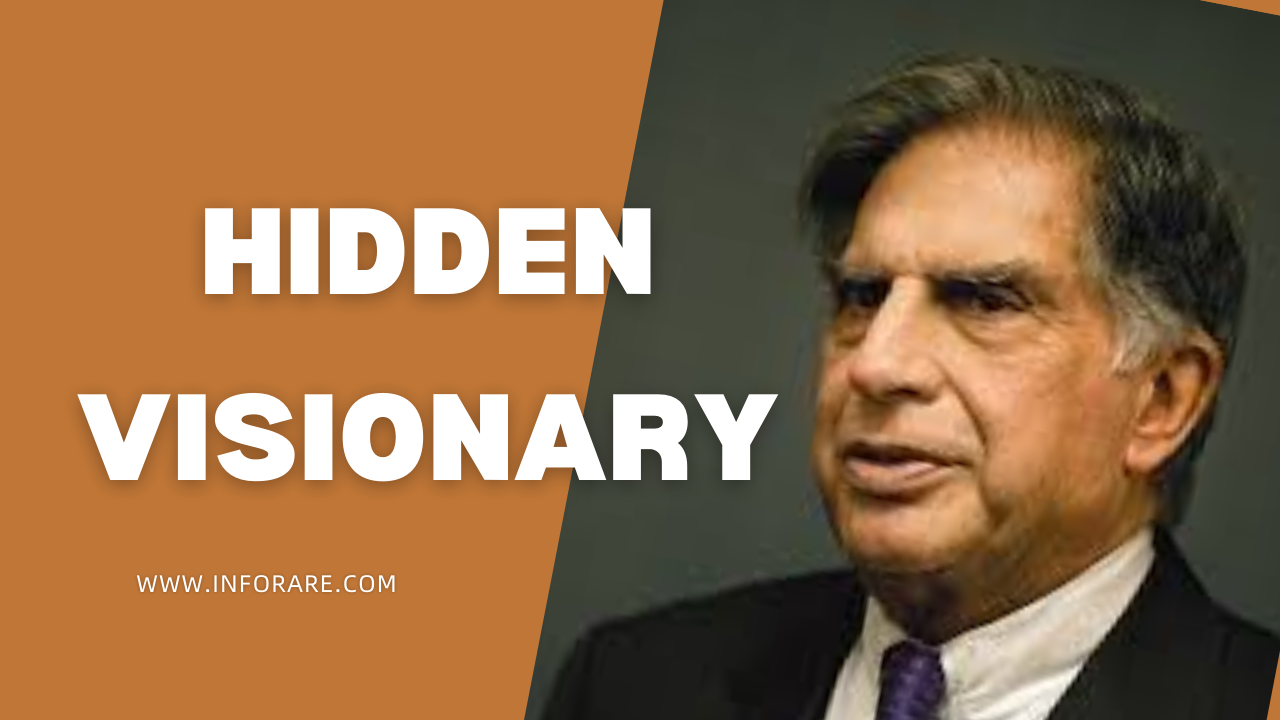
- Here’s the thing about Ratan Naval Tata—most people know him as India’s manufacturing magnate, the chairman of Tata Group who turned a family business into a global empire.
- But that’s the easy version.
- The real story? It’s messier. More human. Honestly, way more engaging.
- When Ratan Tata passed away on October 9, 2024, at age 86, the world lost someone who shaped modern India in ways most of us don’t even realize.
- The person didn’t just build companies. He built them with a specific philosophy: take a decision, and then make it right.
- That’s not just a business quote. That’s how he lived.
- This blog isn’t another corporate biography where we pretend everything was perfect.
- This is about the choices he made that nobody talks about. These choices were shaped by the losses he experienced.
- The risks scared him. The love stories that didn’t work out. The moment a rejection became his greatest comeback.
- If you’re interested in leadership, business, or just understanding what makes someone tick, stick around.
The Only Movie Ratan Tata Ever Produced
- Quick sidebar: Ratan Tata produced a Bollywood film. Exactly one.
- Name of the film is “Aetbaar.” It was a psychological thriller that starred Amitabh Bachchan, John Abraham, and Bipasha Basu in 2004.
- A psychological thriller from 2004 with Amitabh Bachchan, John Abraham, and Bipasha Basu. He produced it with Jatin Kumar through Tata Infomedia.
- It was inspired by the Hollywood film “Fear.”
- But here’s the thing: the movie flopped. It cost Rs 9.50 crore to make and only made Rs 8 crore at the box office. It lost money.
- And that was the last film he ever produced.
- Why mention this? Because it shows that even a billionaire industrialist can swing and miss.
- He tried something outside his wheelhouse. It didn’t work. So he moved on.
- No shame. No regrets. Just a lesson learned.
The Ford Rejection That Changed Everything
- Let me set the scene.
- It’s 1998. Tata Motors is getting crushed. American cars. Japanese cars. Everything except the Tata Indica was winning in the Indian market.
- Ratan Tata made a decision: sell Tata Motors to Ford.
- So he walks into a meeting with Bill Ford, the CEO of Ford Motor Company. And Ford says something that would’ve broken most people.
- “Why did you start making cars if you don’t know anything about it?”
- He called it a “favour.” Tata should be grateful that someone was willing to buy his failing company.
- Ratan Tata felt that sting. Hard.
- But here’s where the story gets good.
- Ten years later, the 2008 recession hits. Suddenly Ford is drowning. The tables completely flip.
- Ford’s luxury brands—Jaguar and Land Rover—are bleeding money.
- And Ratan Tata? He buys both of them for $2.3 billion.
- When Bill Ford came to India after the deal closed, he basically said the same thing Ratan had to swallow a decade earlier.
- Except this time, Ratan was the one doing the “favour.”
- That’s not luck. That’s not even just business strategy.
- That’s a man who refused to let rejection define him. He took Ford’s insult and let it fuel him for ten years straight.
First Indian to Fly F-16 Fighter Plane:
- Let’s talk about something random but totally revealing.
- Ratan Tata was an avid pilot.
- In February 2007, when he was 69 years old, Lockheed Martin—the defence contractor—invited him to fly an F-16 Block 50 fighter jet at an air show in Bangalore.
- The aircraft is worth over $400 million. Top speed? 2,000 km/hour.
- He did it.
- When you’re 69 and someone offers you an F-16, most people say no. It’s dangerous. It’s risky. It’s expensive.
- Ratan Tata said yes.
- That tells you something about the man. He wasn’t afraid to take risks, even when there was nothing to prove anymore.
Ratan Tata’s Personal Life: Love, Loss, and Staying Single
- Here’s something people don’t expect when they think of India’s most powerful industrialist.
- He fell in love. Multiple times. In fact, he fell in love four times.
- But he never got married.
- In the early 1960s, Ratan Tata was living in Los Angeles. He fell for an American girl. Real love. Not just dating. They were actually planning a wedding.
- Then his grandmother got seriously ill back in India.
- He had to go home. Immediately. And right after he left, the India-China war started.
- The girl’s parents refused to let her come to India because of the conflict. He couldn’t go back to America because his grandmother needed him.
- Their love story just… ended. Not with a breakup. Just with distance and bad timing.
- That must’ve hurt.
- Then there was his relationship with Simi Grewal, the Bollywood actress. They were actually close. Like, seriously close. Marriage was on the table.
- But it didn’t work out. They stayed respectful of each other. But something just didn’t align.
- The pattern here is interesting: Ratan Tata was someone who loved fully. Who was willing to commit.
- But life kept getting in the way. Duty kept calling. Family obligations kept coming first.
- So, he stayed single.
- And instead of wallowing, he poured that love into his work, his dogs, and his legacy.
Then There’s His Love for Dogs.
- He adopted a stray dog from Goa and literally named it “Goa.” The dog went everywhere with him. To the office. To meetings. It was part of his life.
- When his dog Tito got seriously ill, Ratan Tata skipped a major ceremony. Prince Charles was giving him a lifetime achievement award for philanthropy.
- A literal royal honour. But Ratan couldn’t leave his sick dog.
- He chose the dog.
- That’s the kind of person he was. His loyalty wasn’t reserved for boardrooms or stockholders. It was for the beings around him who needed him.
- He even made sure stray dogs in Mumbai had free access to Bombay House, the Tata Group headquarters.
- They had a special place where they could rest and eat.
- Small detail? Maybe. But it shows you how he thought.
The Nano: Because One Image Changed His Mind
- You want to know what started the Tata Nano?
- It wasn’t a market analysis. It wasn’t a business plan sitting on someone’s desk.
- It was a family of four riding on a scooter in the rain.
- Ratan Tata saw them. Completely soaked. Exposed. Unsafe.
- Something broke in him while watching that.
- He thought, there has to be a better way. A car so affordable that families don’t have to risk their lives on a scooter just to get around.
- That was the Nano.
- Now, the Nano didn’t become the world-changing product everyone hoped for.
- It had its problems. Market conditions changed. People had different expectations.
- But that’s not the point.
- The point is this: Ratan Tata saw a problem most people would walk past without thinking twice.
- And he spent years trying to solve it. Not because it would make him billions. But because it bothered him that it existed.
- That’s the difference between someone who’s just building a business and someone who’s building something that matters.
The Harvard Case Study: Leadership During Crisis
- Here’s something that probably surprised most people: Harvard Business School wrote a case study about the Taj Mahal Hotel’s response during the 2008 Mumbai terrorist attacks.
- The title: “Terror at the Taj Bombay: Customer-Centric Leadership.”
- The study focuses on how the hotel staff responded when attacks were happening.
- How they protected guests. How they managed an impossible situation.
- And the weird part? Even Ratan Tata couldn’t fully explain why his employees acted the way they did.
- That’s because you can’t force that kind of behaviour with a memo or a policy. It comes from culture.
- It comes from how a leader treats people when nobody’s watching.
- The Taj’s staff had been trained to put guests first. Not as a rule, but as a value that was baked into everything they did.
- That’s organizational culture in its purest form.
Why His Funeral Wasn’t Traditional (And What That Says)
- Here’s a cultural detail most people overlooked.
- Ratan Tata was Parsi. The Parsi tradition involves something called the “Tower of Silence,” or Dakhma.
- When someone dies, they’re placed there, and vultures handle the rest.
- It sounds strange if you’re not familiar with it, but the reason is environmental: it keeps water, air, and fire clean.
- But there’s a problem: vulture populations have crashed in India. There aren’t enough vultures to handle the bodies anymore.
- So the Parsi community started shifting their practices. Electric crematoriums became more common.
- They still honour Zoroastrian beliefs, but in a way that works with the modern world.
- Ratan Tata’s funeral reflected this. He was cremated using an electric crematorium instead of the traditional method.
- The Maharashtra government also gave him a state funeral, which is a massive honor.
- It’s a small detail, but it’s revealing. Even at the end, Ratan Tata adapted. He met the times where they were.
- He didn’t insist on doing things the “traditional way” just because that’s how they’d always been do
- What We Can Actually Learn from Ratan Naval Tata
- Let me be straight with you.
- Ratan Tata had advantages most of us don’t have. He was born into the Tata family.
- He had access to elite education. He had capital and resources that 99% of people never will.
- That’s real. And it matters.
- But here’s what he didn’t have that you might actually need:
- He didn’t have shortcuts. He had to actually build something. The Nano didn’t work out the way he hoped.
- Ford rejected him. He lost in love multiple times. The film he produced flopped.
- So when people talk about him like he’s some mythical figure who never failed—that’s not the story.
- The story is that he failed, got rejected, experienced loss, and kept moving anyway.
- He saw a problem (families on scooters in the rain) and spent years trying to solve it.
- He took a rejection and let it fuel him for a decade. He loved fully, knowing it might not work out.
- He gave away more money than most people will ever see.
- That’s not genius-level thinking. That’s just… choosing to care about something bigger than yourself.
The Real Legacy of Ratan Naval Tata
- When the news broke that Ratan Tata had passed away, the internet went a certain direction.
- Tributes. Awards. His accomplishments are listed out like bullet points.
- But what will actually stick?
- The people who worked under him felt a sense of value.
- The kids who got educated because of Tata charities.
- The families who could afford a car instead of a scooter.
- The stray dogs that had a place to rest and eat in Mumbai.
- The relationships he built. The risks he took. The times he could’ve given up and didn’t.
- That’s the legacy.
- Not the net worth. Not the companies. Not the titles.
- It’s how he made people feel. He stood for what he believed in. And the fact that even when things were hard, he kept going.
Final Thoughts
- Ratan Naval Tata wasn’t perfect.
- He was a real person who made real decisions, some that worked out and some that didn’t.
- But he had something most of us need to borrow: he cared about things bigger than himself.
- He took risks when it would’ve been safer not to. He loved people fully. He gave away most of what he earned.
- And maybe most importantly, he understood that a decision only matters if you’re willing to make it right afterward.
- That’s the actual lesson here.
- Not that you should become a billionaire.
- But that means you should commit to something. Pick a direction. Make the call.
- And then spend the rest of your life making it right.
What About You?
- What’s one decision you’ve been putting off because you’re waiting for the “perfect moment”?
- Drop it in the comments.
- Because honestly, the perfect moment doesn’t exist.
- You just pick one and make it work.
FAQ:
Q: How much money did Ratan Tata actually donate to charity?
A: More than $1 billion personally, plus 66% of Tata Group profits. When you’re running a multi-billion dollar conglomerate, that number gets massive. He didn’t just talk about giving back. He built his entire business model around it.
His net worth was around $1 billion. So he basically gave away as much as he kept. Maybe more, when you factor in the group’s charitable giving.
Can you tell me about Ratan Tata’s education?
A: His educational background matters here too. He studied architecture and structural engineering at Cornell. Then got his master’s from MIT’s Sloan School of Management. So, he had the technical knowledge to build things and the business training to scale them.
Q: What was Ratan Tata’s net worth?
A: Around $1 billion. But here’s what’s interesting—he gave away as much or more than he kept. So the “net worth” number is almost misleading. What mattered more was what he chose to do with it.
Q: What was Ratan Tata’s role in the Tata Group?
A: Ratan Tata was the Chairman of Tata Sons from 1991 to 2012. He helped make the Tata Group a global name.
Reading about Ratan Naval Tata’s journey reminds me that success isn’t just about money—it’s about impact. This man lived his values every single day. Truly a legend.
As someone working in the corporate sector, this article made me reflect on my own leadership approach. Ratan Tata’s philosophy of doing business with ethics is truly revolutionary.
“The hidden wisdom of Ratan Naval Tata is finally getting the attention it deserves. This article should be mandatory reading for every MBA student!”
This article opened my eyes to a completely different side of Ratan Tata. I always knew him as a business leader, but these untold stories show his humanity and compassion. Truly inspiring!
Just shared this on my LinkedIn network. The insights about his decision-making process are gold for anyone in leadership positions. More content like this, please!
The untold stories reveal a man who was ahead of his time in understanding corporate social responsibility. Decades later, his vision is more relevant than ever.
Finally, someone wrote about the real Ratan Tata—not just the corporate achievements but his character and values. This is the kind of content India needs more of.
The hidden side of Ratan Naval Tata teaches us that real success is measured by the impact we leave behind, not the wealth we accumulate. Mind-blowing stuff!
I didn’t know about these hidden chapters of his life. The way he handled challenges with grace and humility is something every young professional should learn from. Loved this piece!
The stories behind the stories are always the most powerful. Ratan Tata’s legacy will inspire generations. Thank you for bringing these hidden narratives to light.
Ratan Naval Tata is the definition of a visionary leader who believed in people over profits. More entrepreneurs need to read this and understand real leadership means leaving a legacy, not just making money.
This is excellent content! Could you also write about how his business philosophy differs from other Indian entrepreneurs? Would love to see a comparative analysis